
How the most overlooked aspect of your health might be sabotaging your best decisions
You’ve optimised your calendar, streamlined your meetings, and invested in productivity systems. But there’s one factor affecting your executive performance that you’re probably not even considering: your hydration status.
Here’s something that should make every leader pay attention: research shows that just 1-2% dehydration – the level where you don’t even feel particularly thirsty – measurably impairs the exact cognitive functions you rely on most.
What Mild Dehydration Actually Does to Your Performance
The research findings are clear. Studies published in the Journal of Nutrition and British Journal of Nutrition examined what happens when healthy adults experience mild dehydration – the kind most professionals experience on a daily basis.
The cognitive impact:
- Concentration becomes harder to maintain
- Headaches become more common
- The perception of tasks changes and is seen as more difficult
Think about that last point. When you’re mildly dehydrated, your brain perceives tasks as harder to accomplish. This isn’t mindset – it’s a physiological response – your brain is trying to minimise energy expenditure.
That complex decision that feels overwhelming at 3pm? It might genuinely be easier if you were simply better hydrated.
But it doesn’t end there…
The emotional Impact confirmed by these studies:
- Increased anger and hostility > you’re more easily irritated and frustrated
- Heightened tension and anxiety > you’re more worried and inclined to doubt yourself
- Greater fatigue and reduced motivation > You feel tired and can’t be bothered
- Overall decrease in energy and activity levels > You’re less motivated and less productive
And this is just mild dehydration. Now consider: what if everyone in your office is mildly dehydrated?
What’s the compounded effect on overall business performance?
And then think about this as a long-term problem. I couldn’t find any studies on the effects of long-term mild dehydration. But judging from the short-term findings, it’s logical to assume issues are compounded.
Two Very Different Views of Hydration
The conventional view: Drink eight glasses of water daily. If you’re not thirsty, you’re fine. It’s is only a problem if you’re severely dehydrated.
The naturopathic view: Water is fundamental to every cellular process in your body. Optimal hydration isn’t about avoiding thirst – it’s about cellular performance, electrolyte balance, and supporting your brain, immune system, and digestion to function at their best.
Taking the conventional view leaves a competitive advantage on the table for high-performing professionals.
What's Really Happening at the Cellular Level
Every single cell in your body relies on optimal hydration to function.
Water is the medium through which every biochemical reaction occurs. Nutrients move into cells through water. Waste products are removed through water. Chemical messengers regulating everything from your stress response to your digestion, travel through water. Every mucosal lining from your lungs to your gut is mostly made up of water.
When you’re even mildly dehydrated, this entire system becomes affected. Think of it like sending information through a congested network – everything slows down, messages get delayed, and errors increase. You can still function, but are you optimal? No.
I’ve had clients come to me who drink no water at all. Only coffee, coke, and tea.
Are they inflamed? Yes.
Do they have digestive issues? Yes.
Do they feel great? No.
It’s something that we can address and it has a major impact on their mental performance and stability at work.
The Diuretic Trap: Why You're Drinking Liquids But Still Dehydrated
Most professionals think they’re drinking enough because they consume liquids throughout the day. Coffee, tea, the occasional glass of water, perhaps some alcohol in the evening.
The problem? You’re replacing water with other beverages rather than drinking mostly water.
Coffee and tea: Whilst moderate consumption (3-4 cups) doesn’t significantly dehydrate habitual coffee drinkers, starting your day with coffee after 7-8 hours of sleep is problematic. You wake already dehydrated and fail to rehydrate before adding caffeine.
Everyone’s different and reacts differently to coffee – listen to your body. Does your heart rate increase, are you thirsty afterwards? What is your Lived Experience?
Alcohol significantly dehydrates you, disrupting the hormones that regulate fluid balance.
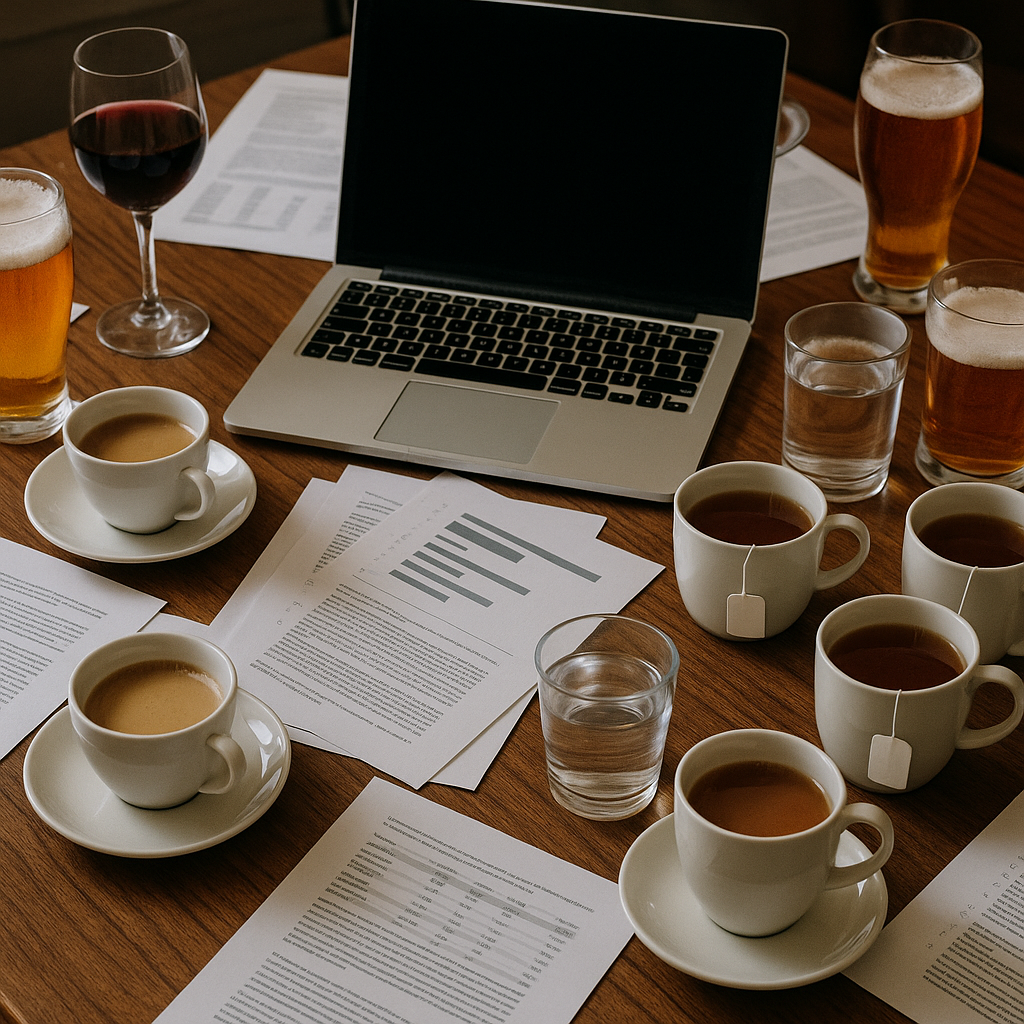
You might drink 500ml of water daily but, you actually might be running a significant hydration deficit once you account for caffeinated beverages, evening alcohol, and the dramatically increased water requirements from chronic stress.
Beyond Water: What Your Cells Actually Need
Optimal hydration isn’t just about water volume – it’s about maintaining the right balance of fluids and electrolytes that allow your cells to function properly.
Think of water as the delivery system and electrolytes as the key that unlocks your cells to actually use that water.
Sodium is essential for fluid balance and nerve function. When you’re under stress and sweating more than usual, your sodium needs increase. With the modern diet, we normally face an excess rather than a deficit.
Magnesium supports over 300 enzymatic reactions, helps regulate your stress response, supports quality sleep, and is rapidly depleted under chronic stress. Most executives I work with need more than their diet supplies.
Potassium works with sodium to regulate fluid balance and maintain steady energy levels, preventing the afternoon fatigue that commonly hits professionals. Another one we could benefit from more of in our diets.
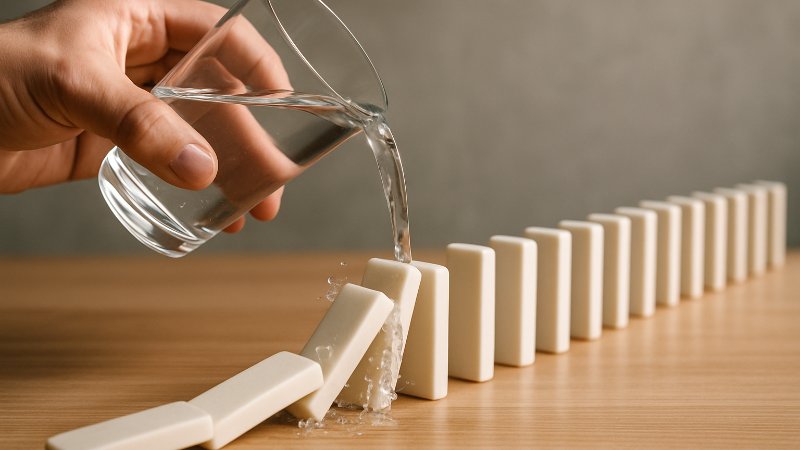
The First Domino
Strategic hydration is the easiest change to implement that creates a cascade of positive effects.
This is why I always start with hydration when working with executives who feel out of balance. It’s accessible, results are often noticeable quickly, and success builds momentum for other changes.
Your executive function, decision-making quality, stress resilience, and sustained energy all depend on something as fundamental as proper cellular hydration. In a world seeking the next productivity hack, perhaps the most powerful tool has been sitting in front of you all along.
Your Executive Hydration Protocol
The key is building systems that work automatically, even when your schedule explodes.
Morning Foundation: Start your day with 500ml of water plus a pinch of high-quality Celtic sea salt and a squeeze of lemon (I add ginger for flavour and anti-inflammatory properties). This simple combination provides electrolytes and helps your body actually absorb and utilise the water. However, if you have high blood pressure and are salt sensitive, stick with lemon and ginger.
Coffee Matching Rule: For every cup of coffee or tea, drink a glass of water. This single rule can transform your hydration status by ensuring you’re adding plain water rather than only relying on caffeinated beverages.
Meeting Strategy: Have water available for every meeting. The physical presence of water makes consumption far more likely. If you don’t like plain water, try a herbal tea as an alternative.
Afternoon Reset: At 2-3pm, before reaching for more caffeine, drink a large glass of water. Wait 15 minutes and see how you feel. Often, dehydration is misinterpreted as needing caffeine.
Account for increased needs: If you’re under chronic stress, drinking alcohol, or consuming multiple caffeinated beverages, you need to significantly increase your water intake. A reasonable baseline for most of us is 1.5-2 litres of water. For very stressed or athletic professionals, 2-2.5 litres of plain water daily might be more supportive, increasing during particularly intense periods.
Ready to build comprehensive resilience strategies that support your peak performance?
Strategic hydration is just the beginning.
Book a consultation to discover how personalised naturopathic nutrition can transform your executive health.
References
Armstrong LE, Ganio MS, Casa DJ, et al. “Mild Dehydration Affects Mood in Healthy Young Women.” The Journal of Nutrition, Volume 142, Issue 2, February 2012, Pages 382-388.
Ganio MS, Armstrong LE, Casa DJ, et al. “Mild dehydration impairs cognitive performance and mood of men.” British Journal of Nutrition, Volume 106, Issue 10, 2011, Pages 1535-1543.
If you are a team leader then you can download our Team Hydration – The 2% Guide to help your team with practical tips.