
When exhaustion from Professional Burnout becomes the norm and "pushing through" just stops working
Last week, I sat across from a successful business owner – let’s call him David – who described feeling “wired” most afternoons despite being exhausted. He mentioned waking at 3am with his mind racing about work, unable to get back to sleep. As we talked, I recognised the telltale signs of early-stage adrenal fatigue, the precursor to full burnout.
What struck me wasn’t just his symptoms – I’d seen them countless times before. It was his complete surprise when I explained what was happening in his body and the potential consequences. This successful, strategic business leader didn’t realise that the “just pushing through” mentality was creating predictable physiological changes that could eventually derail both his health and his business performance.
David isn't alone. In fact, his story reflects a silent productivity crisis that's costing the UK economy between £51 - £70 billion annually.
I know because I’ve been exactly where David is. During my corporate years, I experienced that same wired exhaustion, the same 3am wake-ups, the same assumption that this was just “part of being driven.” It took hitting a complete wall before I understood that what I was experiencing wasn’t dedication – it was my body’s stress response system beginning to fail.
What Is Burnout, Really?
Burnout is a state of physical, mental, and emotional exhaustion. It can occur when you experience long-term stress and feel under constant pressure. Whilst it is caused by stress, it isn’t the same as stress.
The key difference:
- Stress tends to be short term and while it can impact your sleep, energy and emotions, you are still able to engage in the activity that is causing you stress
- Burnout leaves you feeling detached and demotivated, impacting your ability to function even though you keep pushing through.
Professional burnout has become so normalised that we’ve stopped recognising it as the business emergency it actually is.

The Numbers That Should Terrify Every CEO
Let me share some data that stopped me in my tracks when I started researching this issue. The Health and Safety Executive reports that 16.4 million working days were lost to work-related stress, depression, and anxiety in 2023/24. That’s not just a health statistic – that’s nearly 20 days per affected worker compared to just 4.4 days for general sickness.
But here’s what really reveals the scale: 91% of UK adults experienced high or extreme stress in the past year, according to Mental Health UK’s comprehensive survey. The personal impact is devastating:
- Two thirds of workers reported stress disrupting their sleep
- Nearly half noted its impact on their diet and self-confidence
- One in three highlighted its strain on personal relationships
This isn’t about work-life balance anymore. It is about work-life survival.
The Real Cost Hidden in Your P&L
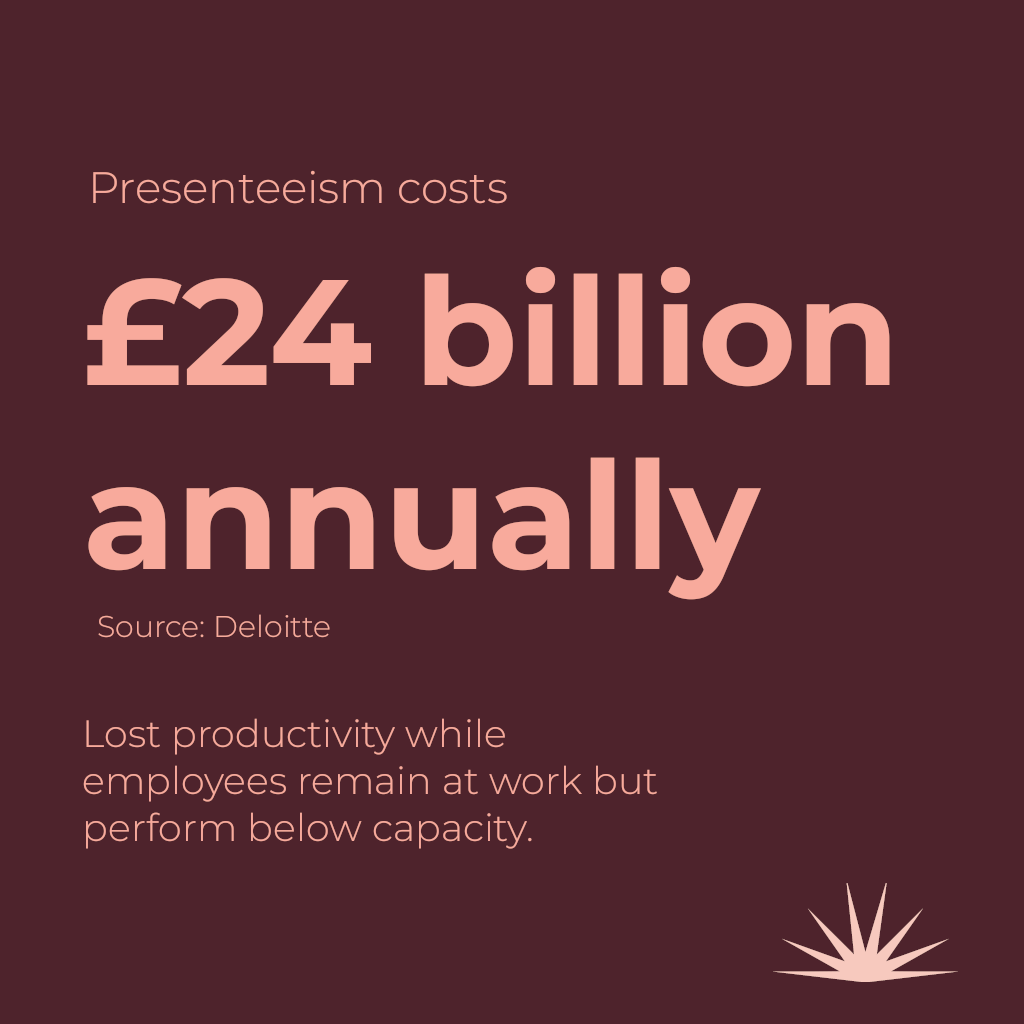
Most businesses track the obvious costs – sick days, recruitment, healthcare premiums. But the devastating expense hiding in plain sight is presenteeism: employees physically present but operating at reduced capacity.
Mental Health UK’s latest research reveals that one in five workers admit that stress or pressure negatively impacts their performance, yet they continue working without adjusting their hours or seeking support.
Consider these productivity metrics:
- 30-50% reduction in work effort for each point increase on burnout scales
- Only 10% of UK workers are genuinely engaged at work, compared to 13% European average
- Deloitte estimates presenteeism costs British businesses £24 billion annually
If 90% of your workforce is disengaged, what’s the real productivity cost?
What I Learned Working with Burned-Out Entrepreneurs
During my 18 years in business, I watched brilliant leaders make progressively poor decisions as their energy reserves depleted. I saw sharp strategic minds become overwhelmed by simple choices. I witnessed natural leaders rely more and more on stimulants to get through the day.
What I didn’t understand then – but see clearly now through my naturopathic lens – is that burnout isn’t a character failing. It’s a physiological breakdown with measurable biological markers.
Your exhausted team isn’t lazy or uncommitted. Their stress response systems are failing.
When cortisol levels remain elevated for months:
- It disrupts blood sugar regulation (hello, 3pm energy crashes)
- Chronic stress depletes B-vitamins and magnesium faster than most diets can replenish them
- Your digestive system literally shuts down under pressure, meaning even good nutrition isn’t being absorbed properly
The result? That sharp professional who used to thrive under pressure now struggles to concentrate in routine meetings.
The Recovery Reality: Why Willpower Isn't Enough
Here’s where my business background converges with my naturopathic training: conventional approaches – stress management workshops, meditation apps, gym memberships – fail because they’re treating symptoms, not root causes. It’s like trying to fix a failing server by changing the error messages instead of addressing the underlying system failures.
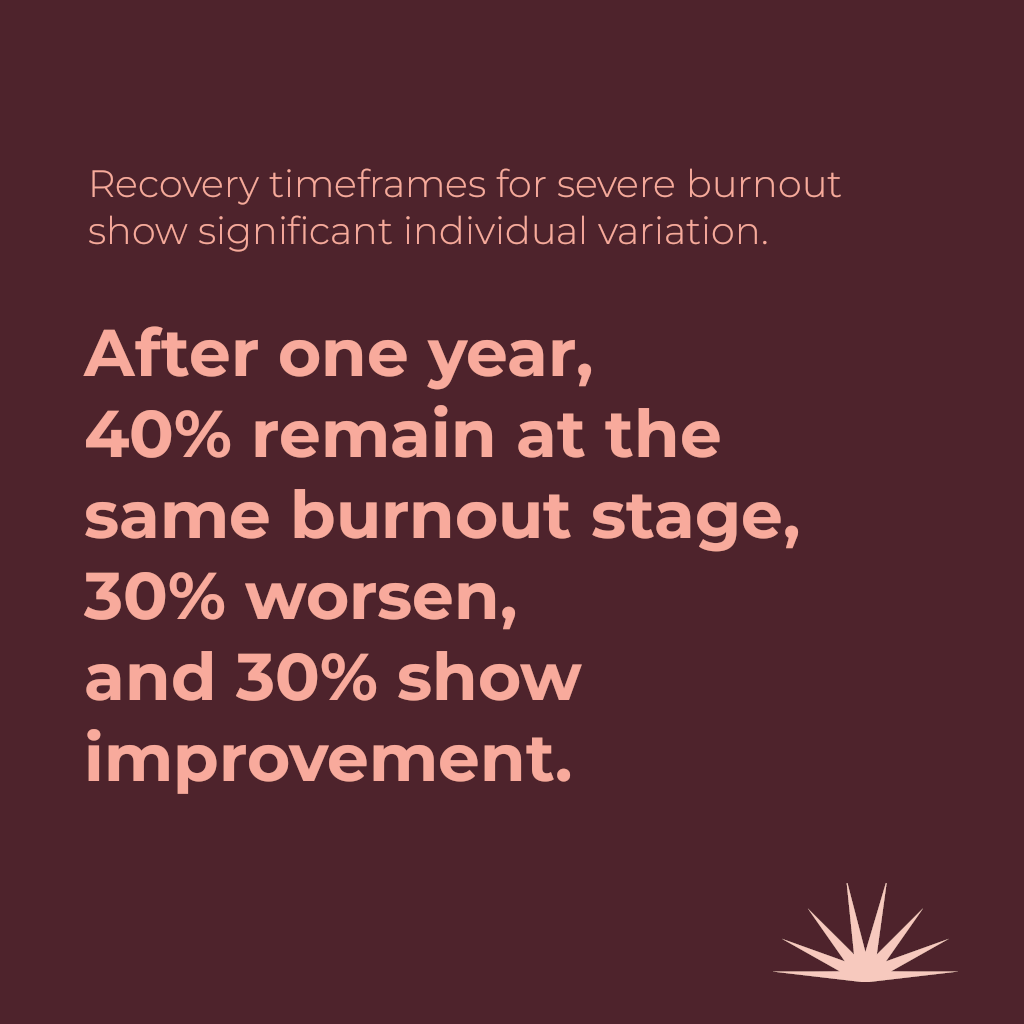
Recovery timelines reveal the scope:
- With proper intervention: Recovery typically takes 8.5 months
- Without it: Studies suggest 18 months to 3 years, with many never fully recovering their previous performance levels
The Naturopathic Framework for Healing
Instead of asking “What disease do you have?” we ask “What’s preventing your body from functioning optimally?” The focus is on:
- Root cause identification rather than symptom management
- Comprehensive functional testing to identify optimal ranges
- Supporting your body’s natural healing mechanisms
- Treating the whole person – mind, body, and lifestyle
- Building resilience for sustainable high performance
Recovery and Prevention: Your Best Investment
Everyone is biochemically individual, but with comprehensive nutrition support, we often see:
Recovery Timeline:
- First 6-8 weeks: Energy patterns begin stabilising, sleep quality improves
- 3-4 months: Cognitive function and stress resilience start improving
- 6-8 months: Most people report feeling better than before their burnout began
Prevention Strategy:
- Regular functional health assessments to catch imbalances early
- Nutritional protocols tailored to your stress levels and lifestyle
- Understanding how your individual body responds to pressure
- Building sustainable recovery practices for busy periods
The investment in prevention is minimal compared to the cost of crisis recovery – not just financially, but in terms of lost opportunities, damaged relationships, and the months or years needed to rebuild health and career momentum.
Ready to Move Beyond Crisis Management?
If you’re recognising patterns in your organisation – or in yourself – know that addressing burnout at its root causes isn’t just possible, it’s essential for long-term success. The combination of understanding individual physiological needs and implementing strategic support creates resilience that enables peak performance without breakdown.
Don’t wait for the crisis. The evidence shows early intervention is more effective and allows you to maintain competitive advantage while building genuine resilience.
As someone who’s experienced both sides of this crisis – the business pressure that creates burnout and the naturopathic nutrition solutions that resolve it – I work with professionals ready to address root causes rather than just managing symptoms. Your health deserves the same strategic attention you give to your career.
Sources and Research References
- Deloitte UK. (2023). “Mental Health and Employers: The Case for Investment – Pandemic and Beyond.”
- NHS England. (2024). “NHS Mental Health Dashboard.”
Peer-Reviewed Studies:
- Mayo Clinic Proceedings. (2022). “Professional Burnout: Recent Developments in Theory and Research.” Available at: https://www.mayoclinicproceedings.org/
- Journal of Occupational Health Psychology. (2022). “Longitudinal study of burnout recovery interventions.” Available at: https://psycnet.apa.org/